
How LED Devices with 660 nm and 850 nm Light Support Skin and Hair Regeneration
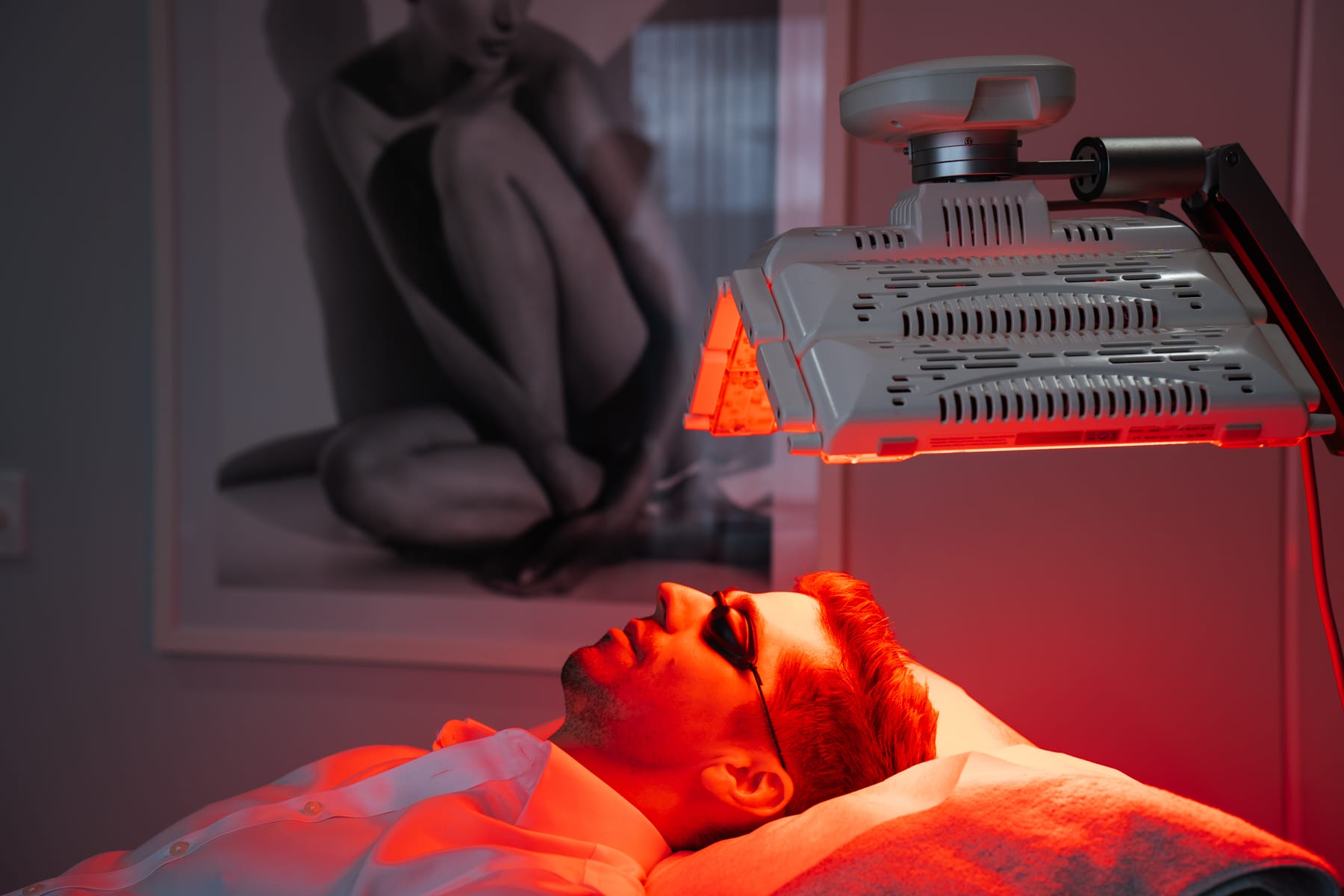
How LED Devices with 660 nm and 850 nm Light Support Skin and Hair Regeneration
Red and Near-Infrared Light for Regenerative Outcomes
Light at 660 nm (red light) and 850 nm (near-infrared light) is widely studied in photobiomodulation (PBM) research for its role in stimulating cellular repair, improving circulation, and supporting regenerative processes.
These wavelengths interact with biological tissues to support:
Hair follicle stimulation
Scalp rejuvenation
Collagen production
Wound healing
Acne recovery
Inflammation reduction
When delivered through wearable LED devices such as LED caps and LED masks, these wavelengths can be applied in clinical and aesthetic settings to support non-invasive regenerative therapies.
Biological Mechanisms of Light Therapy
Cells contain light-sensitive molecules known as chromophores, including cytochrome c oxidase within mitochondria. These molecules absorb photons from red and near-infrared light.
When light energy is absorbed, several biological responses occur:
Increased mitochondrial activity
Higher ATP (cellular energy) production
Nitric oxide release
Activation of cellular signaling pathways
These processes support tissue repair, cellular metabolism, and improved vascular function.
Research describing these mechanisms includes:
Hamblin (2017) — explains how photobiomodulation increases ATP and nitric oxide while modulating inflammation and cellular signaling.
Dompe et al. (2020) — reviews the biological mechanisms and clinical applications of PBM across red and near-infrared wavelengths.
Felician et al. (2023) — summarizes cellular and molecular responses of skin and tissue to photobiomodulation.
Collectively, these studies demonstrate that red and near-infrared light can influence cellular metabolism, vascular activity, and signaling pathways associated with regeneration.
Hair Regeneration Supported by 660 nm and 850 nm LED Light
Mechanisms of Hair Follicle Stimulation
Red and near-infrared wavelengths influence the hair follicle environment through several mechanisms:
Increased cellular proliferation in follicle cells
Improved microcirculation and oxygen delivery to scalp tissues
Support of the anagen (growth) phase of the hair cycle
Delay of follicular regression
Key Research Findings
Several studies have investigated the effect of PBM on hair growth:
Yang et al. (2021) demonstrated that 650 nm red light promotes proliferation of human hair follicles and prolongs the hair growth phase.
Scarpim et al. (2022) conducted a systematic review confirming PBM effectiveness in androgenetic alopecia treatment.
Lodewijckx et al. (2023) observed accelerated hair regrowth in patients following chemotherapy using photobiomodulation therapy.
Clinical trials have also evaluated LED cap devices for hair treatment. For example, Clinical Trial NCT03938948 studied the use of 660 nm LED light delivered through a wearable cap device for scalp hair regeneration.
These findings indicate that repeated PBM sessions may improve hair density and scalp circulation in individuals experiencing hair thinning.
Skin Regeneration with 660 nm and 850 nm LED Light
Fibroblast Activation and Collagen Production
Red and near-infrared light can stimulate dermal fibroblasts, which are responsible for producing collagen and elastin in the skin.
This process may contribute to improvements in:
Skin texture
Elasticity
Structural support of the dermis
Overall skin tone
Research by Felician et al. (2023) highlights the role of PBM in promoting dermal cell proliferation and wound repair.
Systematic reviews have also shown that PBM can influence gene expression related to skin repair pathways (Hamblin, 2017).
Inflammation Reduction and Tissue Healing
Photobiomodulation has been associated with reduced inflammatory cytokines and improved tissue recovery.
Reported effects include:
Faster wound healing
Reduced post-treatment inflammation
Improved recovery after dermatologic procedures
Reduction of fine lines and improvement in skin elasticity
Expert consensus reviews published in the Journal of the American Academy of Dermatology highlight PBM as a safe modality for aesthetic and dermatologic applications.
Frequently Asked Questions
Is LED photobiomodulation safe?
Yes. Published clinical literature supports the safe use of red and near-infrared light within established treatment parameters.
When can results be expected?
Hair improvements are often reported after 8–16 weeks of consistent treatment.
Skin improvements may appear within 4–8 weeks, depending on treatment frequency and baseline condition.
Can LED therapy replace medical treatments?
LED therapy supports regenerative processes but does not replace medical treatments required for underlying conditions.
References
Hamblin MR. (2017). Mechanisms and applications of the anti-inflammatory effects of photobiomodulation. AIMS Biophysics.
Dompe C. et al. (2020). Photobiomodulation—Underlying mechanism and clinical applications. Journal of Clinical Medicine.
Felician MCP. et al. (2023). Photobiomodulation: Cellular, molecular, and clinical aspects. Translational Biophotonics.
Yang K. et al. (2021). Hair growth promoting effects of 650 nm red light stimulation on human hair follicles. Lasers in Medical Science.
Scarpim AC. et al. (2022). Photobiomodulation effectiveness in treating hair loss in androgenetic alopecia. Photobiomodulation, Photomedicine, and Laser Surgery.
Lodewijckx J. et al. (2023). Photobiomodulation therapy for hair regrowth after chemotherapy. Photodermatology, Photoimmunology & Photomedicine.
Maghfour J. et al. (2025). Evidence-based consensus on the clinical application of photobiomodulation for dermatologic and aesthetic indications. Journal of the American Academy of Dermatology.